Private Art Exhibition in Paris: Why Intimate, Immersive Art Experiences Are Reshaping the Art World
The art market has changed significantly. And I’m convinced it’s time to offer something different: sensitive, human, immersive art experiences.
Less distance.
Fewer codes.
More presence, more conversation, more connection.
That’s exactly what I experienced when Marion Peylet invited me to host an art event in her Paris apartment. I said yes immediately.
Because this format speaks to me deeply: a private art exhibition at home, designed as a meeting and a shared moment—not simply a display of artworks.
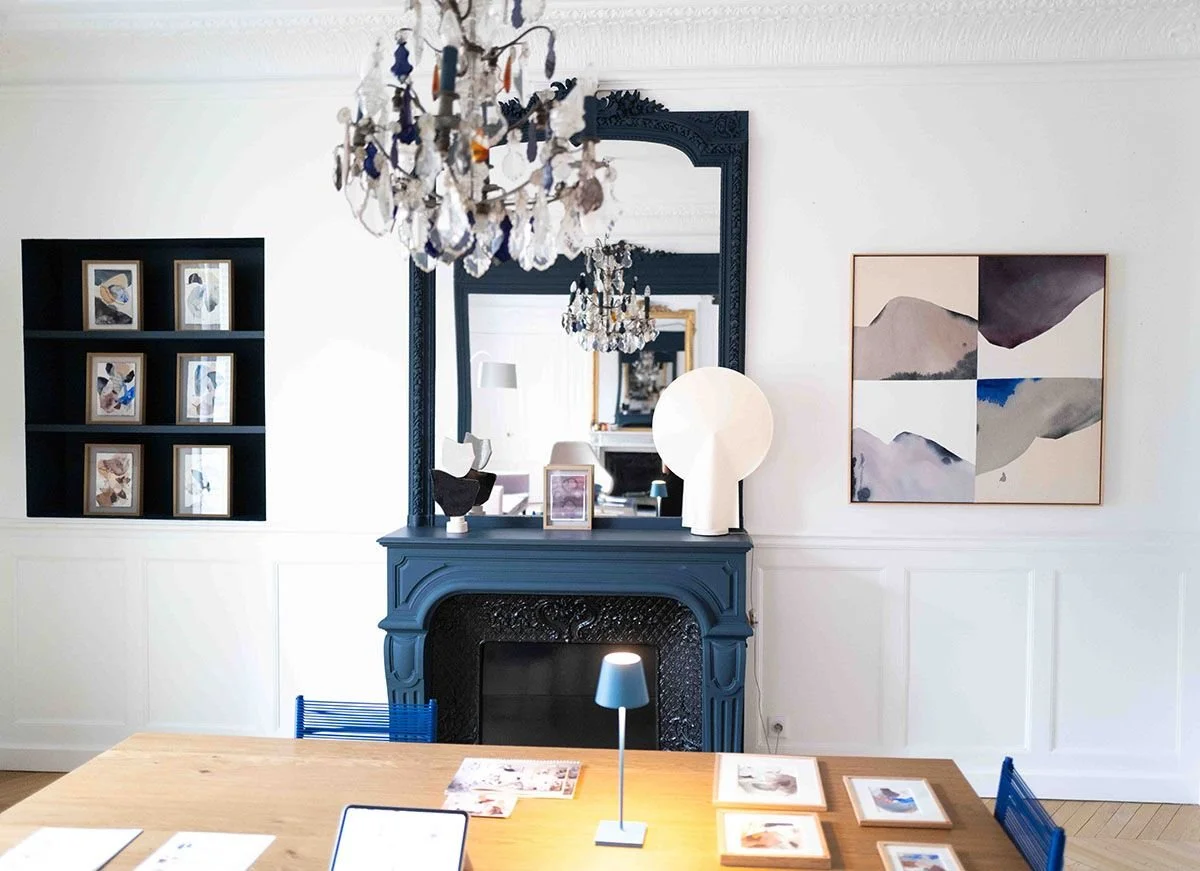
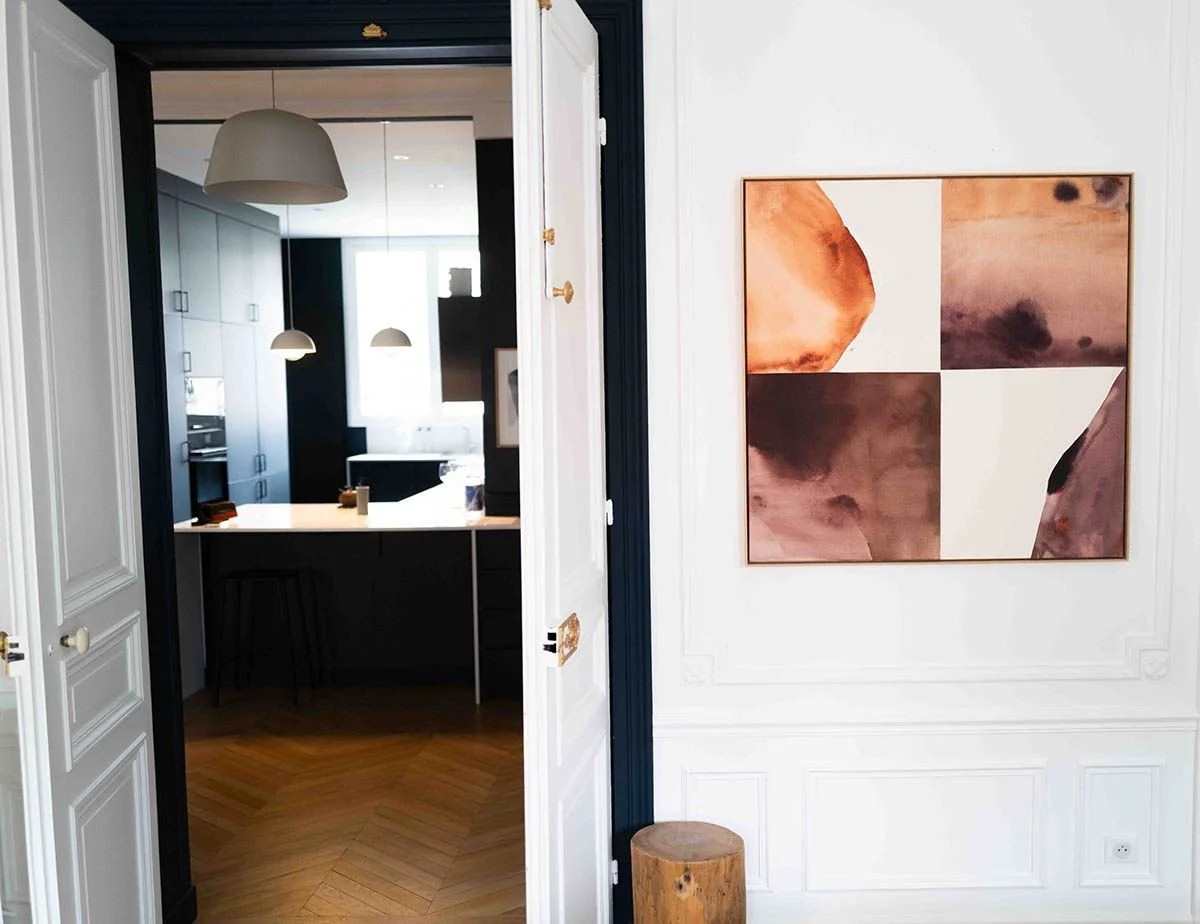
The rise of at-home private exhibitions
In recent years, more collectors and art lovers have been choosing to experience art outside traditional venues. Homes and apartments are becoming spaces for private viewings, artist encounters, and intimate gatherings where the relationship between people and artworks feels more direct.
There is also a broader cultural desire behind this shift: to live art as an experience, not only as an object to observe. Formats that emphasize immersion and participation reflect a genuine need to reconnect—with art, and with each other.
In that context, an apartment becomes the ideal setting: human-scale, warm, and real. A place where you can pause, feel, ask questions, and truly look.
Why Marion’s invitation resonated with my work
Marion has been hosting artistic gatherings like this for two years. Her invitation echoed a previous exhibition I had presented for a collector earlier this year.
As we prepared this new experience together, I felt something rare: a real connection, creative excitement, and a shared desire to propose another way of bringing art to life.
The intimacy of the place, the warmth of the conversations, the small format… all of it moved me.
Because this setting allows something precious: the ability to speak with every person present, to take time, to create real bonds—to make art a moment of sharing, not only of presentation.
A Paris apartment as a living showcase for the “Lisières” series
To honor the spirit of the space and my “Lisières” series, we intentionally limited the number of guests.
Marion’s apartment became a living showcase: my paintings were placed throughout the home, integrated into the space as if they belonged there—like a natural breath.
This is one of the strengths of a private exhibition in an apartment: the artworks aren’t isolated in a neutral white cube. They live with real textures, real light, real perspectives. They become inhabitable again.
What I presented that day were fragments of memory—small pieces of stories stitched together.
And that is exactly what we lived, too: a moment woven collectively, in a soft and authentic atmosphere.
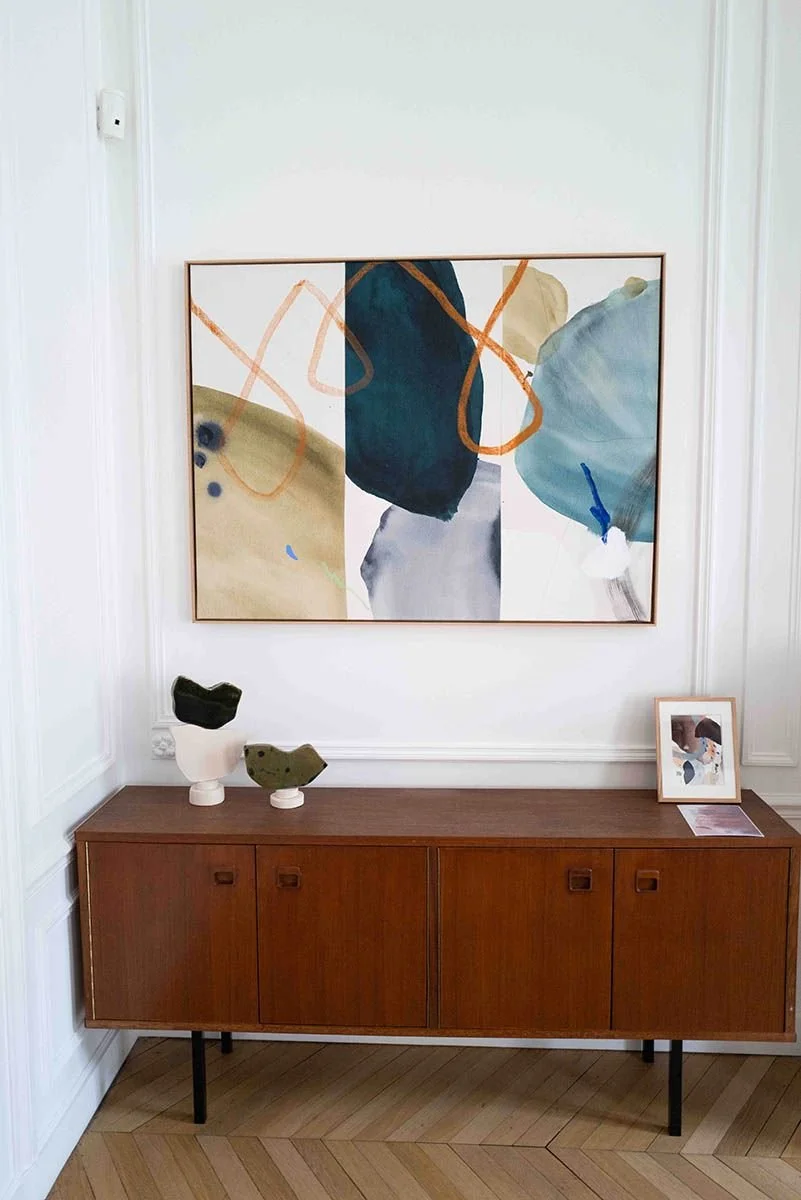
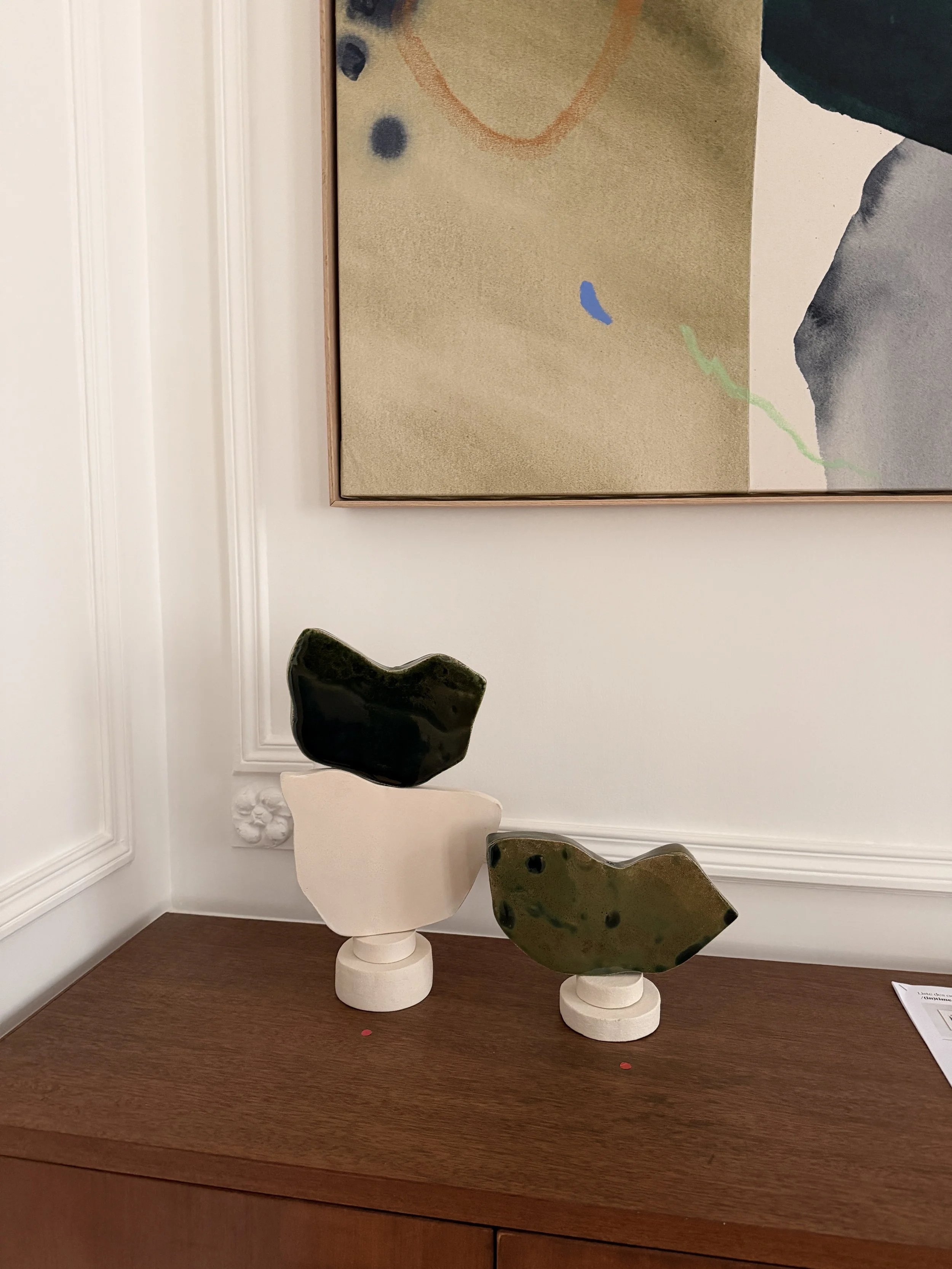
What changes in an intimate format (and why it matters)
A traditional exhibition often creates distance: a pace, a flow, a frame. A private viewing or at-home artist gathering, on the other hand, opens up another tempo.
In this format, I found:
proximity: real conversations with each guest
depth of attention: more personal, more nuanced questions
transmission: sharing the artistic process without rushing
trust: allowing time for the artwork to be seen—truly seen
Ultimately, it reminded me why I create: to create is to build connection. To touch, move, and invite exchange.
This kind of gathering gave me exactly that: sincere closeness, a moment outside of time, and a different way of letting my work exist in the world.
How to host an immersive art experience at home
If you’re a collector, a host, or simply curious about organizing a private art event in your home (in Paris or elsewhere), here are the elements that make the difference.
1) Think “experience,” not just “hanging artworks”
An immersive art experience isn’t about quantity. It’s about coherence:
a clear intention
a narrative thread (a series, a theme)
a rhythm for the visit (free-flowing or guided)
time for conversation with the artist
2) Embrace the small format
Limiting the number of guests isn’t a constraint—it’s a strength.
A smaller group allows better listening, deeper discussion, and a more genuine relationship with the artworks.
3) Let the artwork integrate into the space
The power of a home is its reality: materials, light, life.
The installation should work with the space, not neutralize it.
4) Curate the human moment
A short introduction, an artist who is available, a shared conversation—these details often transform a visit into a true encounter.
Conclusion: Toward a more human, more sensitive art world
This experience reminded me of what I value most: art that creates connection, and spaces that allow it to happen.
I truly believe art needs more of these human-scale, sensitive environments. And I believe many of us want to build them—together.
If you would like to host a private art exhibition (at home, in your company, or in a place that matters), or create an intimate gathering around a series, I would love to discuss it with you.